Breast cancer is complex.
Understanding your treatment options shouldn’t be.
After getting my BCI results, if I could sum up that feeling in one word, I would say relief. Relief that I don't have to take this [medication] daily anymore."
Women like Cheryl found their finish to anti-estrogen therapy. Let stories like hers help you find yours.*
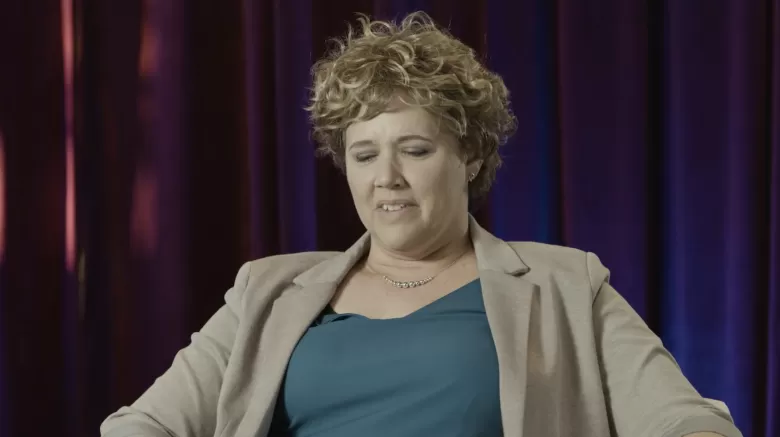
Women like Cheryl found their finish to anti-estrogen therapy. Let stories like hers help you find yours.*
Frequently Asked Questions
While other tests may provide information about your risk of recurrence, only the BCI test is validated and recognized by national oncology guidelines to provide your personal risk of recurrence and a prediction of whether continuing anti-estrogen therapy beyond 5 years is likely to help reduce that risk.1-6
Both the Oncotype DX and BCI tests are genomic assays used in early-stage, HR+ breast cancer to help make treatment decisions by predicting overall risk of recurrence and therapy benefit, however, they are used to inform different treatment decisions.
Oncotype DX predicts whether you are likely to benefit from chemotherapy.7 On the other hand, the BCI test provides valuable information to help providers and patients personalize anti-estrogen therapy treatment plans. The BCI test helps patients and providers to make a decision around the length of anti-estrogen therapy (5 vs. 10 years) by predicting whether you are likely to benefit from continuing anti-estrogen therapy after the 5-year mark and your specific risk of metastatic recurrence in years 5-10, with or without longer treatment.8
You may be eligible for BCI Testing if:
- You are biologically female and have been diagnosed with early-stage (I to IIIa) breast cancer.
- You are node-negative or node-positive with up to 3 positive nodes.
- Your breast cancer is estrogen receptor–positive (ER+) and/or progesterone receptor-positive (PR+).
- You have not experienced a metastatic recurrence.
Ask your doctor if the BCI test is right for you.
BCI testing does not require any additional procedures. After your doctor orders the BCI test, Biotheranostics reaches out to the pathology lab to collect the tumor sample from your original biopsy or surgery.
BCI testing may be ordered any time post-diagnosis and is best used to help you and your provider determine your endocrine therapy plan after initial treatment, like chemotherapy, surgery, and radiation. Start the conversation and talk to your doctor about ordering the test to develop a clear, personalized anti-estrogen therapy plan from the beginning!
The time it takes to run BCI testing from the initial order can vary based on a variety of factors, including patient and client services outreach, order processing, verification of your eligibility for testing, and the time it takes to receive your original tumor sample from the pathology lab. Once the specimen and all required information have been received, testing typically takes 7-10 business days.
To avoid delays in your results, please respond to our Patient Services as soon as possible, or you may contact them directly after your healthcare provider has ordered the test.
We want to ensure all eligible patients have access to the test, regardless of their insurance plan.
As a guideline-recognized test, BCI is also covered by most insurance plans. As with all health-related visits, tests and procedures, patients may be responsible for any unmet deductible, co-pays, and co-insurance as outlined by their individual insurance plans.
Our broad Financial Assistance Program supports patients by reducing out-of-pocket cost for those who qualify. New flexible payment plans are also available to create more manageable monthly payments.
Your test results will be sent back to your healthcare provider who ordered the test. They will review your results with you and discuss treatment recommendations.
Testing must be ordered by a provider with a valid National Provider ID (NPI) within the United States. International patients may find a U.S.-based provider to order the test. International patients are responsible for retrieval and shipping of the specimen. This includes shipping cost and ensuring the specimen is properly preserved for shipping.
1. Referenced with permission from the NCCN Clinical Practice Guidelines in Oncology (NCCN Guidelines®) for Breast Cancer V.4.2026. © National Comprehensive Cancer Network, Inc. 2026. All rights reserved. Accessed June 16, 2026. To view the most recent and complete version of the guideline, go online to NCCN.org. NCCN makes no warranties of any kind whatsoever regarding their content, use or application and disclaims any responsibility for their application or use in any way. 2. Andre F, et al. J Clin Oncol. 2022;40(16):1816-1837. Referenced with permission from the American Society of Clinical Oncology (ASCO®) Clinical Practice Guideline Biomarkers for Adjuvant Endocrine and Chemotherapy in Early-Stage Breast Cancer. © American Society of Clinical Oncology. 2026. All rights reserved. To view the most recent and complete version of the guideline, go online to https://ascopubs.org/jco/special/guidelines [ascopubs.org]. ASCO makes no warranties of any kind whatsoever regarding their content, use of application and disclaims any responsibility for their application or use in any way. 3. Sgroi DC, et al. J Natl Cancer Inst. 2013;105(14):1036-1042. 4. Bartlett JMS, et al. Clin Cancer Res. 2022;28(9):1871-1880. 5. Noordhoek I, et al. Clin Cancer Res. 2021;27(17):311-319. 6. Mamounas EP, et al. Clin Cancer Res. 2024;30(9):1984-1991. 7. Exact Sciences. Oncotype DX Breast Recurrence Score® Test. Accessed June 16, 2026. https://www.exactsciences.com/cancer-testing/oncotype-dx-breast-recurrence-score-providers 8. Biotheranostics, Inc., A Hologic Company. Breast Cancer Index®. Accessed June 16, 2026. https://breastcancerindex.com/