"What length of anti-estrogen therapy is right for me?"
Women diagnosed with early-stage, hormone receptor-positive (HR+) breast cancer are typically treated with anti-estrogen therapy for at least 5 years to reduce the risk of a metastatic recurrence.1 Some premenopausal women are also treated with ovarian function suppression (OFS). New information from Breast Cancer Index® (BCI™) testing identifies a group of patients at Minimal Risk* (defined as <5% risk of 10-year metastatic recurrence) who may consider less aggressive treatment. This can mean shorter duration of anti-estrogen therapy for postmenopausal patients, or the omission of OFS for premenopausal patients.
For women not identified by BCI testing as being at Minimal Risk*, late recurrence continues to be a concern, with 50% of recurrences happening after the five-year mark. While some women may benefit from continuing endocrine therapy beyond 5 years to further help reduce their risk of metastatic recurrence, not all do.6-9
of patients said it "would have been helpful to have greater clarity from the beginning about how long they would need to take their anti-estrogen therapy."12
Only the BCI test is guideline-recognized to predict whether an additional 5 years (10 total years) of anti-estrogen therapy is likely to benefit you.10,11
The BCI test provides valuable information to help you and your provider determine a clear plan for your anti-estrogen treatment from start to finish.

The BCI Test Helps You Weigh the Benefit vs. Side Effects of Longer Anti-Estrogen Therapy
If you experience uncomfortable and frustrating side effects as a result of taking anti-estrogen therapy routinely, you are not alone. Many side effects of anti-estrogen therapy can negatively affect daily life and may lead to serious adverse effects.13-22

longer until
I feel like
myself again?"
While side effects of anti-estrogen therapy may be uncomfortable, knowing the medication is likely to benefit you may give you the motivation you need to continue.
94% of patients said they "would feel more motivated to stay committed to taking their medication as prescribed if a genomic test evaluating their specific tumor biology suggested a longer duration of anti-estrogen therapy was likely to help reduce their risk of metastatic recurrence."23
RESULTS THAT MAKE A DIFFERENCE

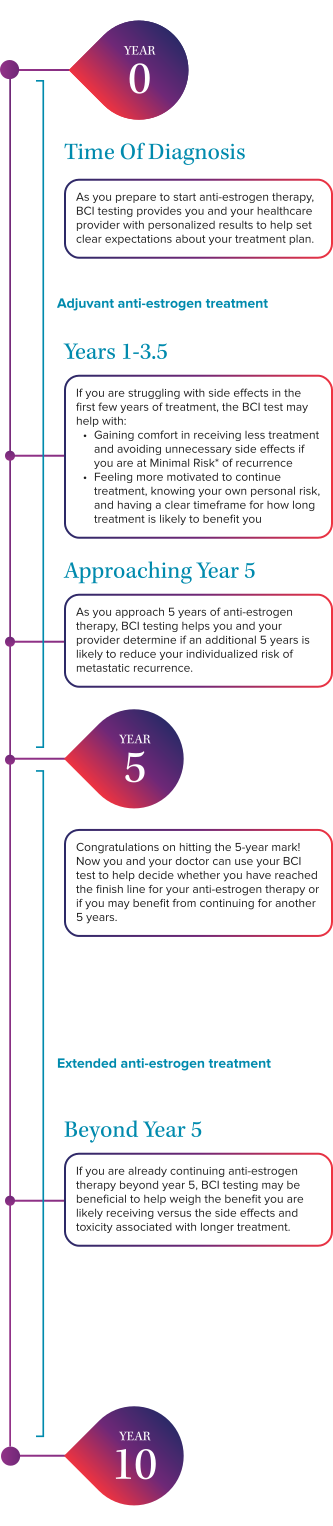
Your Breast Cancer Timeline
Depending on where you are in your diagnosis and treatment timeline, your doctor may order the BCI test to help with treatment planning related to your anti-estrogen therapy:
1. Burstein HJ, et al. J Clin Oncol. 2014;32(21):2255-2269. 2. Jilderda MF, et al. Clin Cancer Res. 2025;3;31(11):2222-2229. 3. Jilderda MF, et al. npj Breast Cancer. 12,21 (2026). 4. O'Regan RM, et al. Breast. 2026;86:104714. 5. Pan H, et al. N Engl J Med. 2017;377:1836-1846. 6. Sgroi DC, et al. J Natl Cancer Inst. 2013;105(14):1036-1042. 7. Bartlett JMS, et al. Clin Cancer Res. 2022;28(9):1871-1880. 8. Noordhoek I, et al. Clin Cancer Res. 2021;27(1):311-319. 9. Mamounas EP, et al. Clin Cancer Res. 2024;30(9):1984-1991. 10. Andre F, et al. J Clin Oncol. 2022;40(16):1816-1837. Referenced with permission from the American Society of Clinical Oncology (ASCO® Clinical Practice Guideline) Clinical Practice Guideline Biomarkers for Adjuvant Endocrine and Chemotherapy in Early-Stage Breast Cancer. © American Society of Clinical Oncology. 2026. All rights reserved. To view the most recent and complete version of the guideline, go online to https://ascopubs.org/jco/special/guidelines. ASCO® Clinical Practice Guideline makes no warranties of any kind whatsoever regarding their content, use of application and disclaims any responsibility for their application or use in any way. 11. Data collected from 192 early-stage, HR+ breast cancer patients in an online survey conducted by Living Beyond Breast Cancer. 12. Referenced with permission from the NCCN Clinical Practice Guidelines in Oncology (NCCN Guidelines®) for Breast Cancer V.4.2026. © National Comprehensive Cancer Network, Inc. 2026. All rights reserved. Accessed June 16, 2026. To view the most recent and complete version of the guideline, go online to NCCN.org. NCCN makes no warranties of any kind whatsoever regarding their content, use or application and disclaims any responsibility for their application or use in any way. 13. Breastcancer.org. Side Effects of Hormonal Therapy for Breast Cancer. Breastcancer.org. Last updated June 11, 2026. Accessed on June 16, 2026. https://www.breastcancer.org/treatment/hormonal-therapy/side-effects 14. U.S. Food & Drug Administration. Armidex Full Prescribing Information. Last updated December 16, 2024. Accessed June 16, 2026. https://www.accessdata.fda.gov/drugsatfda_docs/label/2024/020541s036lbl.pdf 15. U.S. Food & Drug Administration. Aromasin Full Prescribing Information. Last updated December 16, 2024. Accessed June 16, 2026. https://www.accessdata.fda.gov/drugsatfda_docs/label/2024/020753s025lbl.pdf 16. U.S. Food & Drug Administration. Femara Full Prescribing Information. Last updated September 16, 2025. Accessed June 16, 2026. https://www.accessdata.fda.gov/drugsatfda_docs/label/2025/209092Orig1s025,209935Orig1s031lbl.pdf 17. U.S. Food & Drug Administration. Nolvadex Full Prescribing Information. Last updated March 13, 2009. Accessed June 16, 2026. https://www.accessdata.fda.gov/drugsatfda_docs/label/2002/17970s37s44s49lbl.pdf 18. U.S. Food & Drug Administration. Soltamox Full Prescribing Information. Last updated April 8, 2019. Accessed June 16, 2026. https://www.accessdata.fda.gov/drugsatfda_docs/label/2019/021807s006lbl.pdf 19. Breastcancer.org. Ovarian Suppression and Other Alternatives to Ovary Removal. Last updated July, 30, 2025. Accessed June 16, 2026. https://www.breastcancer.org/treatment/surgery/prophylactic-ovary-removal/alternatives 20. U.S. Food & Drug Administration. Zoladex Full Prescribing Information. Last updated May 6, 2026. Accessed June 16, 2026. https://www.accessdata.fda.gov/drugsatfda_docs/label/2026/019726s076lbl020515s013lbl.pdf 21. U.S. Food & Drug Administration. Lupron Depot Full Prescribing Information. Last updated September 10, 2025. Accessed June 16, 2026. https://www.accessdata.fda.gov/drugsatfda_docs/label/2025/019943s040s041,020011s047s048lbl.pdf 22. Mannion, S. et al. Sci Rep 14, 4418 (2024). 10.1038/s41598-024-54961-6. 23. Data collected from 192 early-stage, HR+ breast cancer patients in an online survey conducted by Living Beyond Breast Cancer.